
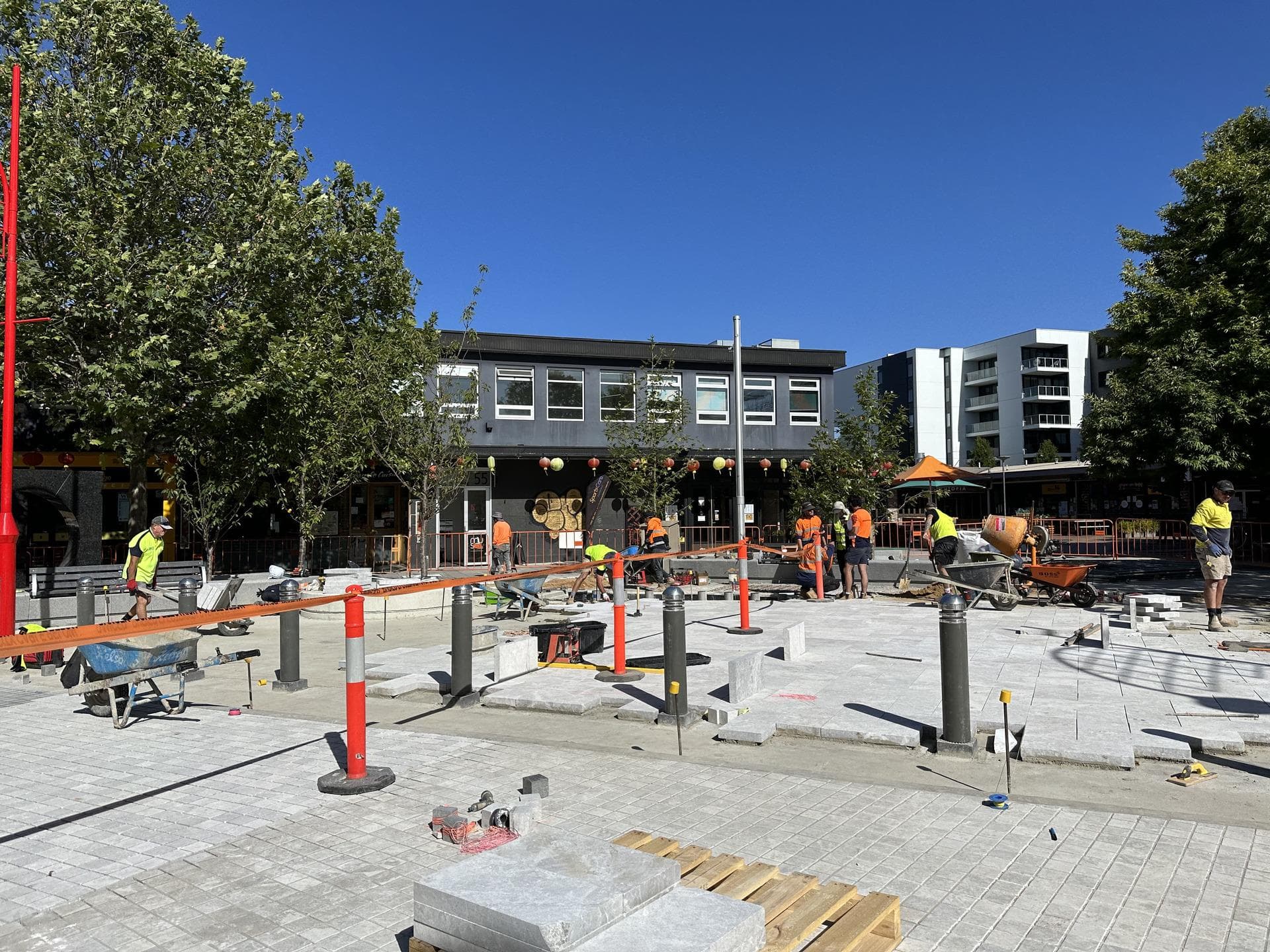
In fewer than three years, Canberra-based Civil Construction company, YARA has grown from a new kid on the block, to a sought-after Indigenous-owned contractor delivering multi-million-dollar projects across regional Australia.
And while this may look like overnight success, for Managing Director Andrew Muirhead that momentum is no accident. It’s the product of his business partner’s deep industry experience, his own networking smarts and a deliberate focus on training and community outcomes.
“We went in guns blazing,” Andrew said, adding that the civil construction expertise, combined with business savvy, of partner and Director Lach Haskins, meant the company started with “a fair bit of experience and knowledge in the industry, which has been really great for YARA.”
From its Canberra base, YARA works across regional New South Wales and is branching into the Northern Territory and South Australia. It aims to be a turnkey solution for clients where the project is deployed.
The company was designed to be able to mobilise in regional communities, where it can have the greatest impact and where government agencies often struggle to source capable contractors.
A key part of YARA’s model is its focus on Indigenous training and employment, with a structured Indigenous Construction Program, working real jobs on real projects.
YARA partnered with TAFE NSW to develop a tailored Cert II & III qualification to share civil construction expertise with the community.
Traditionally, a Cert can take two to three years. YARA and TAFE compressed this into a 12week model, with units focused on safety, core site skills and plant operation. The short, intensive pathway is aligned to real project needs.
“We sat down and said, ‘Hey, what do these guys and girls need to be effective and add value to our site?’,” Andrew said.
The program, delivered at both Wagga Wagga and Queanbeyan TAFE NSW campuses, is free for Indigenous applicants and provides direct employment opportunities.
The shorter, focused program has also driven much stronger completion rates.
In 2025, 31 people took part in the course, with 81% on track to be fully qualified, and 65% already employed in the industry.
“The shorter program just means that our completion rates are much higher. I guarantee, if we ran that same program over a three‑year period, our completion rates would be probably aligned with the national average, which sits around 30–40%,” Andrew said.
These courses and opportunities are only possible when YARA has projects that it can deliver and employment opportunities can be dependent on the ongoing projects.
YARA has been a subscriber to ICN Gateway from “day one”, using it to track defence and infrastructure opportunities and to connect with major contractors.
“A lot of the bigger contractors all publish on ICN, so we felt the need to do that,” Andrew said.
YARA took part in ICN’s Canberra Business Challenge, an initiative designed to help ACT businesses “Be Seen, Be Heard, Lead the Way” by showcasing capabilities and sharing key messaging and visual content with a wider network.
The challenge also gave ICN the chance to engage directly with small-medium business owners, understand their goals and motivations, and learn how they are finding new and innovative ways to thrive.
For YARA, visibility and credibility are everything.
“I think the more we can promote YARA and what we do, the more people get touch points and can see we’re a reputable business that can deliver projects at scale.” said Andrew. “We can deliver a project that’s worth $20 million or we can deliver a project that’s worth $10,000.”
In the next five years, YARA aims to cement its place as the Indigenous civil construction business that clients turn to for scale, reliability and real community impact – from Canberra to the regions and beyond.
Find out more about YARA.